
Pan in Education
- BostonsOwn
- Aug 28, 2024
- 7 min read
Pan in Education Ver.1
Steel Orchestras of Trinidad & Tobago/Finland
2 CDs includes 114 MBs of Scores
and Sound Examples
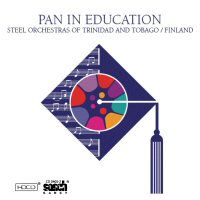
This item includes
Pan in Education Business Model
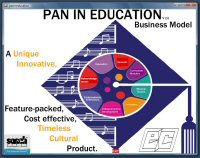
eCaroh Price: $39.95
Wholesale Prices Available.
Enquire: info@sweetsoca.com
Track Listing:
Disc 1 - Audio Recordings
Another Time Another Place - Samaroo Jets (J. Samaroo) 5:59
Glory - Excellent Stores Silver Stars (E. Pouchet) 5:40
Killer Instinct - UWI Steel Ensemble (N. Saunders/J. Murray) 3:08
De Challenge Is Minor - BP Renegades Youth (A. Samaroo) 6:35
Fire and Steel - Sagicor Exodus (P. Goddard) 5:02
A Land For All - Tropical Angel Harps (C. Morris) 5:09
Passion For Pan - CFS Pantasy (D. Stewart) 6:03
Woman In Pan - TCL Skiffle Bunch (J. Samaroo) 5:58
Identity - Courts Sound Specialists of Laventille (C. Codrington) 5:32
Whey de Pan Man - Lydian Steel Ensemble (K. Brown) 5:26
Pan Celebration - St. Augustine Girls' High School (A. Samaroo) 5:38
J'Ouvert Morning - National Steel Orchestra (C. Morris) 5:35
For The Love - Steelpan Lovers (Finland) (A. Vitanen) 7:27
Total Playing Time: 73:12
All music composed by Mark Loquan; tracks 2 and 11 with Andy Sheafe. Arrangers as indicated.
Disc 2 - Digital Files
Musical Scores in FINALE, MIDI and PDF formats
Categorisation of Scores according to Levels of Difficulty
Clips of Original Songs
Notes on Participating Steel Orchestras
Biographies of Arrangers
Notes on Caribbean and Latin Rhythms
Liner Notes for Disc 1
Pan in Education
PROMOTIONAL VIDEO (9:44 mins)
The video files are provided here, please click on the format best suited to your computer to play the video, or right-click and save on your computer to play later:
AVI (70MB)
MPG (83MB)
WMV (91MB)
See more on Steel Pan Education
EXAMPLE OF DIGITAL FILES FOR EACH OF THE THIRTEEN RECORDINGS ON DISC 1.
Another Time, Another PlaceArranged by: Jit SamarooPerformed by: Samaroo JetsComposed and written by: Mark Loquan
Categorization
To better understand the rating given to this piece, we advise that you review the categorization definition used in assessing the difficulty level, learning outcomes and connections to other arts and subject areas listed below.
Difficulty level
Intermediate Level – Easy to Moderately Difficult(Extended solos for DS, C, T, B require independent sections)
Learning outcomes
Formal structure: variation form with 'jam' sections, bridge passages, intro and coda Counter melody in the cello. Solos for sections.
Keys/Modulations: D major, F major, D minor
Small ensemble texture
Strumming: DS, G
Solos: DS, C, T, B
Slow soca-ballad groove
Slow Latin 'jam'
Connections to other arts and subject areas
Drama: mood – nostalgic, dreamy longing for a better world
Social Studies: the struggles of the steelband movement; other uses of the imagery of fire in steelband music and calypsos to describe social struggles
Dance: slow, graceful movements
Full Scores
The full score is available in three different formats for your viewing and listening pleasure.
Finale
MIDI
PDF
Instrumental Extracts
We have provided you with extracts of the songs for the various formats:
INSTRUMENTS
Tenor
Double Seconds
Guitar
Cellos
Bass
Percussion
Drums
Congas
Cowbells
Pan in Education Project: A Note to Music Teachers
Edited by PanOnTheWeb.com from the digital files on Disc 2.
Introduction
In June 2003, Mark Loquan initiated a project out of a strong belief that the music of Trinidad and Tobago should be recorded, scored, and integrated fully into educational curricula, for universal distribution. The exercise, undertaken jointly with Sanch Electronix Ltd, involved working with several reputable arrangers and steel orchestras to perform arrangements of 13 of his compositions with the intention of using such music for educational purposes.
Mark has been composing since 1978 and his music has been performed by a number of steel orchestras, worldwide. In 1998, at the Pan is Beautiful Festival the winning ensemble played one of his works. Both conventional and single-pan bands performed his pieces at Panorama in Trinidad and Tobago in 1999 and 2001-2005.Internationally, his music has been auditioned in Brooklyn, Toronto, Finland and in 2002 at the European Steelpan Festival in Sete, France.The first phase of the Pan in Education project consists of a programme on a two-compact disc set. The programme is geared principally towards secondary and tertiary education levels, where it is assumed that one would have acquired some ability to play or learn from the arrangements.
However, disc two [Digital files] contains notes on Copyright Issues, Caribbean Rhythms and The Symphonic Soundstage that are an essential requirement for study by all music students. The programme also seeks to outline a relationship between instruments of the conventional symphony orchestra and those of the steel orchestra. Using these guidelines, music teachers and arrangers will therefore be able to transpose scores written for one family of instruments to the other. This will in turn create numerous opportunities for cross-fertilisation of cultures through the availability of a larger, diversified universal repertoire to students.The steelpan has also proven to be the ideal medium for producing excellent group music with a minimal learning curve.
The Product
The final product consists of a double CD:
Disc 1 is on-location recorded arrangements of each song ranging from 4 to 6 minutes, performed by various steel orchestras;
Disc 2 includes the musical scores, computerized using Finale Music Program 2002 format, and showing individual parts to be played by various steelpan instruments, namely, tenor, double tenor, double second, etc. With Finale, the score may be played on the computer, in parts or in its entirety, at any tempo. Students not having the Finale Music Program may access scores in MIDI format.
PDF files are available for those who simply wish to have a printout of each score.
Short MP3 clips containing the original verses and choruses with vocals/lead lines are provided as an insight into how arrangers have embellished the melodies.
Digital files containing notes on Caribbean Rhythms have been included as an aid to those who are unfamiliar with them.
Finally, a relationship between instruments of the conventional symphony orchestra and those of a steel orchestra has been suggested. This will assist music teachers and arrangers in transcribing music for the steelpan. Conversely, music written for pan may be adapted for playing with traditional instruments.
Benefits
The main benefits to be accrued from this double CD programme are as follows:
For music students, the scores will be a valuable resource for learning the many different aspects of music theory and arranging techniques. The programme encompasses a range of playing skills, mainly from intermediate to advanced levels, as the primary focus has been towards the secondary level of education. It is therefore hoped that some of the arrangements will be selected for the CXC [Caribbean] Examinations, and also as test pieces for School Festivals.
Of the thirteen songs, twelve contain lyrics, which tell stories pertaining to some aspect of pan culture in Trinidad and Tobago. It is therefore possible to use the music as a resource in collaboration with the [other] performing arts, thus adding yet another dimension to the programme.
Because short verse and chorus clips are included, one can distinguish and learn arranging techniques used for each song.
The use of interactive digital technology, whereby scores may be played on the computer, user-friendly interfaces (point and click) will expose children to hearing local compositions from a tender age. They will see the link between music that is aural, and the fact that such music can be scored and played if one is musically literate. While the project is not geared towards "making people music literate", exposure even at elementary level will create a desire for the attainment of music literacy. It will also assist with catalyzing a change from learning by rote to sight-reading from an early age.
The project also encompasses songs with lyrics related to the national musical instrument of Trinidad and Tobago, the steelpan. This may be utilized as part of cultural development and understanding even at elementary school level. The lyrics may be linked to social studies, drama, dance or poetry.
The Steelbands
BP Renegades Youth
CFS Pantasy
Courts Sound Specialists of Laventille
Excellent Stores Silver Stars
Lydian Steel
National Steel Orchestra
Sagicor Exodus Steel Orchestra
Samaroo Jets
St. Augustine Girl’s High School
Steel Pan Lovers (Finland)
TCL Group Skiffle Bunch
Tropical Angel Harps
UWI Steel Ensemble
Pan in Education – Making Pan History
Boston, MA – January 10, 2005.
The first 2005 release from Sanch is Pan in Education. Simeon Sandiford describes the double CD thus: "it is the first of a series of unique, innovative, feature-packed, cost-effective, timeless cultural products, conceptualised by citizens of Trinidad and Tobago with the prime objective of playing in the global marketplace”. It is available from eCaroh Caribbean Emporium.
Dr. Patricia Bishop has praised the Pan in Education project for the important features placed “in a single, convenient and attractive package”. “It records visually both on paper and by means of the computer the music of Mark Loquan and associated lyrics. It also records the music aurally so that [pan] players can hear the music even before they learn to play it. The project showcases a number of [steel] bands and their arrangers so that a variety of arranging and playing styles can be studied and appreciated”.
In addition, she continues, “the package contains invaluable interpretative and performance notes, together with advice to teachers. This could help them enliven their music lessons and to integrate music into the wider curriculum. In this regard, the contribution of Sat Sharma to the project must be singled out for special mention.”
Mr. Loquan who is the composer of Pan in Education informs us that it “is geared specifically for secondary and tertiary levels”. The production “involves a wide cross section of the music community, from arrangers, steelbands, schools, universities, pannists to those scoring and proof-editing the arrangements.”
“It was conceived out of the strong view that our local music can and should be documented as a computerized learning tool for education. It is also meant to complement the current thrust towards placing pan in schools and improving music literacy levels using local musical arrangements”.
According to Mr Sharma, Lecturer in Musical Arts, Centre for Creative and Festival Arts, University of the West Indies “the thirteen arrangements have been classified into levels of difficulty with learning outcomes and linkages to other curricular areas identified. The repertoire provides for the development of ensemble playing for secondary schools at the intermediate and advanced levels, with such classification being justified by the following considerations: length, rhythm, melody, texture (which includes harmony), use of percussion and tempo.”
Commenting on behalf of the Ministry of Education, Augustus “Junior” Howell, Curriculum Officer – Music, states that “this double CD compilation…underscores the strong belief that our heritage in general, and local music in particular, should not only be recorded, but also documented and integrated fully into the music curriculum. This collection provides the opportunity for a wide cross section of music enthusiasts to experience steelpan music and hopefully display their musical talent”.
[eCaroh.com/ Ron Lammy]